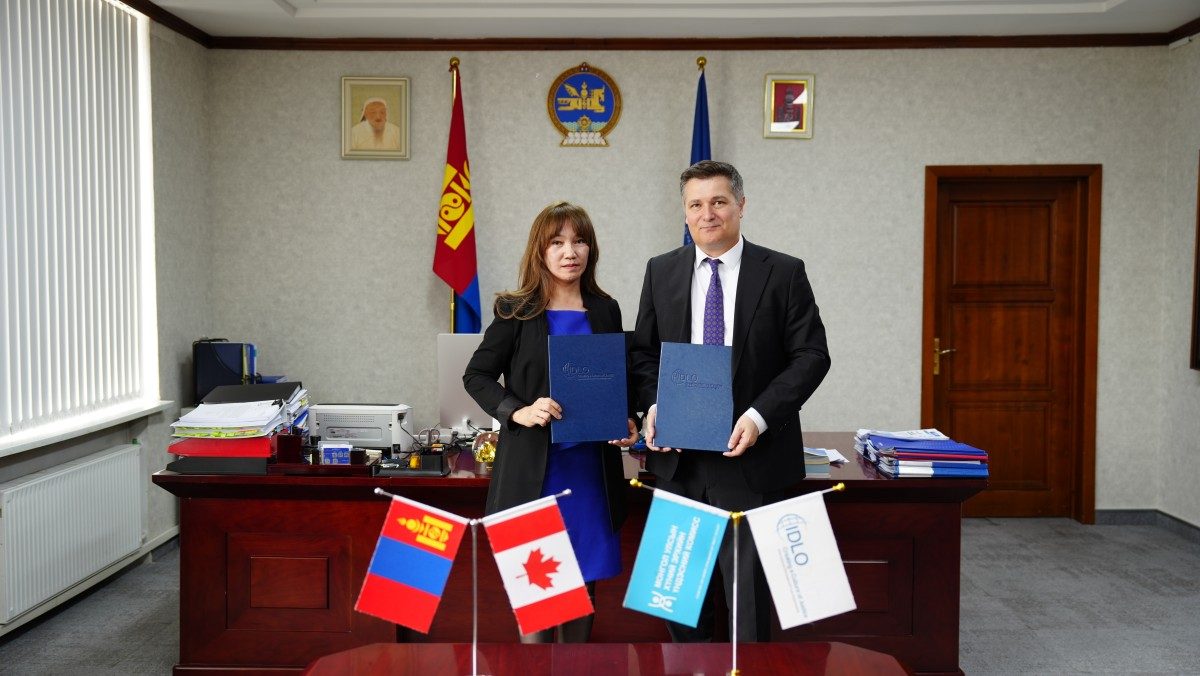
Chief Commissioner D. Sunjid of the National Human Rights Commission of Mongolia received Charles Bolland, Country Representative of the International Development Law Organization (IDLO), and relevant officials to exchange views on future cooperation.
During the meeting, the parties signed a Memorandum of Understanding within the framework of the second phase of the project “Strengthening the System to Combat Gender-Based Violence in Mongolia,” funded by the Ministry of Foreign Affairs of Canada.
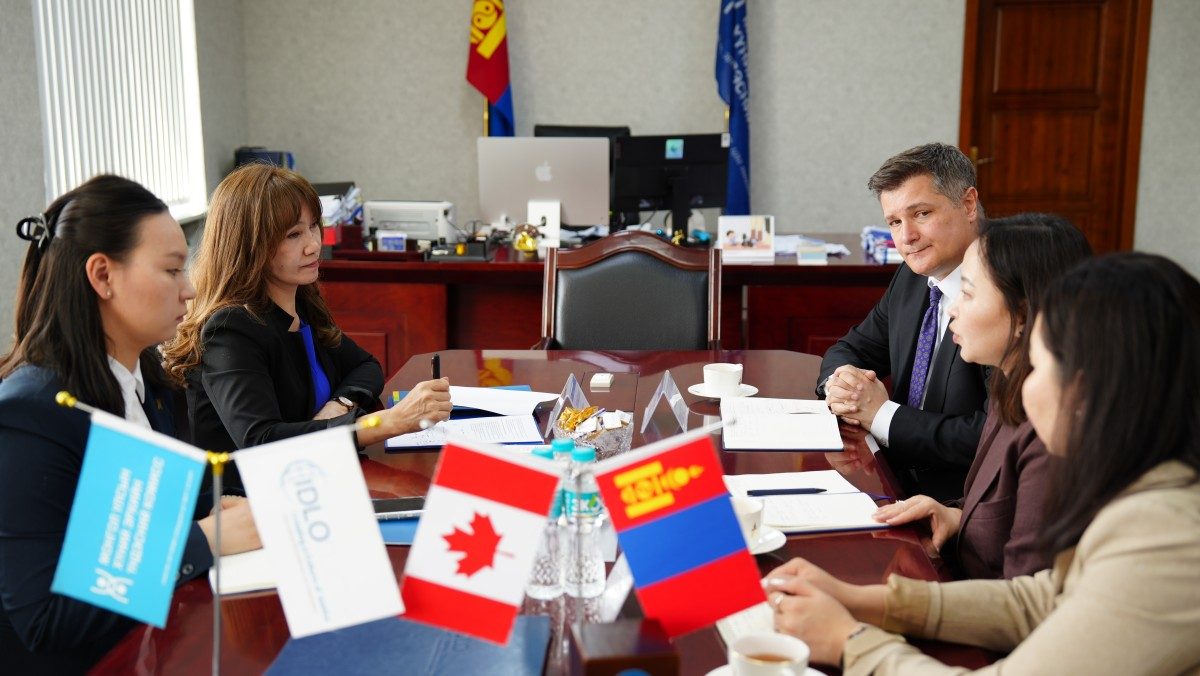
Under the Memorandum of Understanding, the parties will cooperate to improve the legal framework, policies and institutional mechanisms for combating domestic and gender-based violence; promote a victim-centred approach among law enforcement and judicial officials; strengthen inter-agency cooperation; and increase public awareness.
The parties also agreed to undertake an assessment of the implementation of the Law on Combating Domestic Violence, improve training programmes and manuals, strengthen prevention of technology-facilitated gender-based violence, and increase access to services for people living in remote areas and persons in vulnerable situations.
During the implementation period, the NHRCM will provide strategic and policy recommendations and guidance concerning the legal and institutional framework for combating domestic and gender-based violence. Following the completion of the project, the Commission will also take appropriate measures to support the sustainability and continuation of the project’s results.
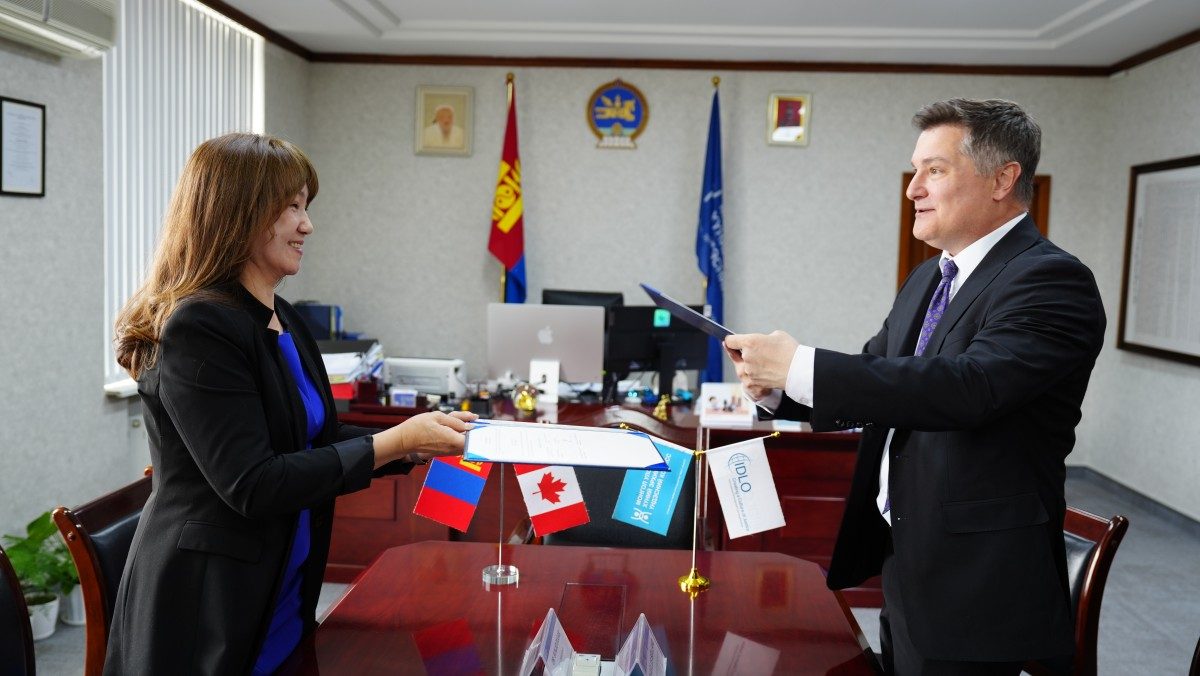
This cooperation is expected to make an important contribution to strengthening Mongolia’s national system for combating gender-based violence, protecting victims’ rights and enhancing the effectiveness of prevention measures.